Radio Brisvaani

Ahmedabad/New Delhi, June 14 (IANS) The Federation of Indian Pilots (FIP) on Sunday asked Aircraft Accident Investigation Bureau (AAIB) to conduct a comprehensive new series of Boeing 787 simulator tests and re-examine evidence relating to the deployment of the aircraft’s Ram Air Turbine (RAT) in the crash of Air India Flight AI-171, arguing that simulator results do not support key timings contained in the bureau’s preliminary report.
In a letter to the Director General of the AAIB, FIP president Captain C.S. Randhawa said the pilots’ body had received a submission from advocate D. Michael Andrews of Beasley Allen, a US law firm representing passengers and families affected by the accident.
The letter centres on the timing of RAT power generation following fuel interruption. According to FIP, the AAIB preliminary report stated that fuel system interruption occurred at 08:08:42 UTC and that hydraulic power from the RAT was produced approximately four to five seconds later.
Quoting Andrews’ submission, FIP said: “The videos and preliminary data analysis appear to contradict key points in the timeline of VT-ANB RAT deployment and power generation contained within the Indian AAIB preliminary report.”
The submission further stated: “Flight simulator testing indicates that RAT generated power is not produced until around 18 seconds following fuel system interruption.”
According to the letter, if the RAT power-generation timestamp recorded on aircraft VT-ANB is accurate and the simulator tests are representative of actual aircraft performance, the results would suggest that the RAT had already deployed and begun spinning before any fuel interruption occurred.
The submission argued that the tests indicate “the RAT deployment may be unrelated to fuel system changes and instead may be a symptom of faults occurring prior to any fuel disruption”.
The letter also referred to images reproduced in the AAIB preliminary report showing the RAT visible immediately after take-off and claimed that still images extracted from Ahmedabad Airport security-camera footage appeared to show the RAT already deployed on the runway before aircraft rotation.
It said these observations, taken together, “tend to indicate that the RAT deployment (a potential symptom of electrical system failure) was not caused by alleged pilot-induced fuel system changes”.
FIP attached a summary of simulator observations comparing the AAIB timeline with test results. According to the document, RAT hydraulic power became available approximately 18 seconds after fuel interruption in the simulator, compared with four to five seconds in the AAIB timeline, a difference of about 14 seconds.
The letter also compared take-off performance figures. It said the AAIB timeline recorded achievement of V1 at 56 seconds and VR at 58 seconds.
Simulator testing reportedly produced a mean V1 time of 40.9 seconds in nine static take-off tests and 46 seconds in one rolling take-off test, while VR was reached at a mean of 42 seconds in the static tests and 48 seconds in the rolling take-off test.
“The issues raised warranted further examination alongside survivor accounts referring to a loud bang and dimming cabin lights, ACARS maintenance messages transmitted between 07:53 and 08:08 UTC, and damage visible in an aft Enhanced Airborne Flight Recorder image reproduced in the preliminary report,” the letter stated.
The pilots’ body asked investigators to correlate those elements with recorded aircraft data “to establish a coherent sequence of events and determine whether any electrical system anomalies contributed to the accident”.
The letter requested that AAIB conduct Boeing 787 simulator tests in the presence of an observer nominated by FIP to independently verify both the acceleration profile contained in the preliminary report and the relationship between RAT deployment, RAT hydraulic power generation and fuel-control-switch movement.
FIP further requested that Air India Engineering and Boeing be asked to decode fault and status information contained in ACARS maintenance messages transmitted between 07:53 UTC, about 14 minutes before the take-off roll began, and 08:09 UTC, when a “mayday call” was transmitted.
The letter reproduced a series of ACARS entries referencing systems including BPCU Gateway Operations, Flight Control Modules, Hydraulic Operations, General Processing Modules, Captain’s Electronic Flight Bag equipment, zonal dryer systems and Common Core System functions.
In addition, FIP requested a copy of Ahmedabad Airport security-camera footage for what it described as independent analysis aimed at determining the precise timing of RAT deployment before take-off.
The organisation also called on investigators to examine why, despite Air India’s access to Boeing 787 simulators and ACARS maintenance data, the airline’s Flight Operations and Flight Safety departments had not highlighted what it described as “discrepancies involving RAT hydraulic-power timings and aircraft maintenance messages during the investigation”.
The letter referred to previous FIP correspondence sent to investigators on March 12 and 17 concerning what it called a request for simulator correlation with RAT imagery and the Digital Flight Data Recorder timeline in the AI-171 investigation.
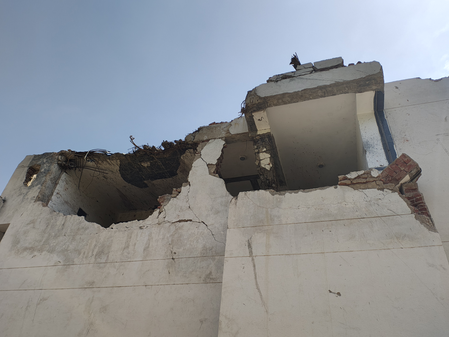
The crash of Air India flight, a Boeing 787-8 operating from Ahmedabad to London Gatwick on June 12 last year, killed 241 of the 242 people aboard and 19 people on the ground, making it one of India’s deadliest aviation disasters.
Investigators have said the inquiry remains ongoing and that no final report has yet been issued.
The AAIB has stated that analysis of flight data, maintenance records, operational information and engine examinations is continuing.
–IANS
mys/pgh