Radio Brisvaani

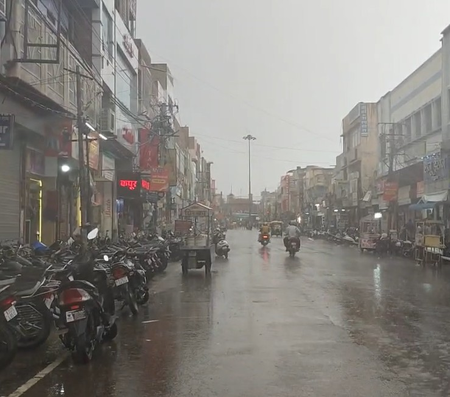
Jaipur, June 16 (IANS) Even before the official onset of the southwest monsoon in Rajasthan, Chittorgarh district has witnessed record-breaking pre-monsoon rainfall. During the first 15 days of June, the district received 88 mm (3.46 inches) of rain, surpassing levels recorded during the same period over the past three years.
The unusually high rainfall has defied earlier expectations of a weaker monsoon season following the intense heat experienced during the Nautapa period.
According to the India Meteorological Department (IMD), the monsoon is expected to reach Chittorgarh and the Mewar region between June 22 and June 25. If current weather patterns continue, June 2026 could emerge as one of the wettest months in recent years.
Meteorological data from the past four years highlight the significance of this year’s pre-monsoon activity. The 88 mm rainfall recorded in just the first half of June has already exceeded the total rainfall received during the entire month of June 2025, which stood at 75 mm. It has also nearly matched the June 2024 total of 91.2 mm.
Although rainfall levels remain slightly below those recorded during the same period in 2023, when Cyclone Biparjoy triggered exceptionally heavy showers, weather experts describe the current pattern as highly unusual for a normal pre-monsoon season. The figures underscore the unusually strong pre-monsoon activity witnessed this year. Despite the promising start, meteorologists caution that the overall monsoon season could still be affected by El Nino conditions.
According to IMC Jaipur director Dr R.S. Sharma, active El Nino conditions could reduce rainfall during the core monsoon months. The phenomenon has the potential to weaken southwest monsoon winds and reduce seasonal rainfall. As a result, total monsoon precipitation this year may remain around 90 per cent of the long-term average, placing it in the below-normal category despite the heavy pre-monsoon showers.
El Nino is a climate phenomenon characterised by unusually warm sea surface temperatures in the central and eastern Pacific Ocean. In India, it often weakens southwest monsoon circulation, leading to below-average rainfall and longer dry spells. The IMD reported that the southwest monsoon reached the Kerala coast and is progressing steadily across peninsular and eastern India.
–IANS
arc/skp