Radio Brisvaani

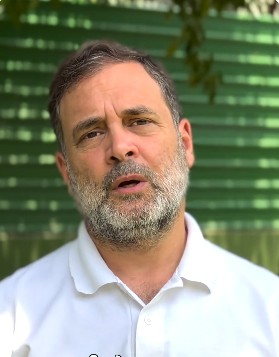
New Delhi, June 20 (IANS) Congress leader Rahul Gandhi’s latest intervention in the National Eligibility-cum-Entrance Test (NEET) examination process has once again sparked questions about whether his politics is being driven by facts or by the pursuit of headlines.
Barely 48 hours before the NEET-UG 2026 re-examination, the Congress MP amplified allegations surrounding a Nagpur candidate who had been allotted an examination centre in Abu Dhabi.
He projected the same as yet another example of what he called administrative failure. This triggered anxiety among lakhs of students and parents already under immense examination pressure.
However, the account presented by the National Testing Agency (NTA) paints a significantly different picture.
According to NTA officials, web-activity records show that the examination city was changed to Abu Dhabi through the candidate’s own registered login during the correction window that had been reopened following the rescheduling of the examination.
The agency says the change was made once and subsequently previewed twice using the same credentials, with a consistent single-user access pattern.
Government sources point out that nearly 3.2 lakh candidates utilised the correction facility and more than 99.5 per cent received their preferred examination cities. In this context, they said that presenting a single disputed case as evidence of systemic collapse was both premature and irresponsible.
More significantly, NTA officials said that when an informal request was received on the evening of June 19 — just two days before the examination — they acted immediately.
According to the NTA, officials contacted the candidate’s father, initiated the formal process, and ultimately approved the request to shift the centre from Abu Dhabi to Nagpur despite the circumstances surrounding the case.
The government’s position is that the episode demonstrates responsiveness rather than negligence.
Officials said that even when records suggested the city change originated from the candidate’s own account, the agency adopted a “student-first” approach to ensure that no aspirant lost an opportunity to sit for the examination.
This incident reflects a recurring pattern in Rahul Gandhi’s politics: raising serious allegations before all facts are available and then moving on once clarifications emerge, say political observers.
Questioning any institution without waiting for verification can unnecessarily amplify public anxiety, particularly in matters involving high-stakes examinations affecting millions of young Indians, they add.
According to them, social media-driven politics rewards outrage over accuracy.
Meanwhile, analysts criticise politicians’ habits to react first and verify later.
In sensitive sectors such as education, the consequences of such premature interventions can be especially damaging, say analysts.
There is no doubt that rumours and speculation often spread much faster than official clarifications.
As the NTA’s account indicates, the agency investigated the matter, engaged directly with the family, and facilitated the requested change.
For many observers, that sequence encapsulates a broader criticism of Rahul Gandhi’s political approach: a tendency to rush to indictment first and scrutiny later.
–IANS
brt/khz