Radio Brisvaani

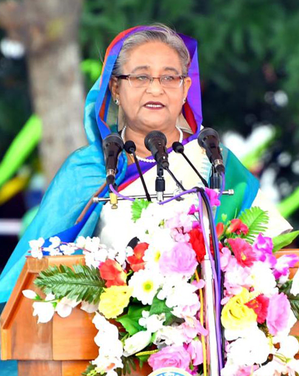
New Delhi, Jan 23 (IANS) Bangladesh’s former Prime Minister Sheikh Hasina condemned Dhaka’s interim government led by Muhammad Yunus in her harshest words yet, accusing it of plunging the country into “an age of terror”, and termed the Chief Adviser a “murderous fascist”.
In a 10-minute audio message played during a media interaction by Awami League (AL) leaders at the Foreign Correspondents’ Club of South Asia in central Delhi on Friday, the deposed leader described Bangladesh as “bleeding” and standing “at the edge of an abyss”.
Recounting the legacy of her father Sheikh Mujibur Rahman, who is hailed as the architect of Bangladesh, the 78-year-old AL leader alleged that the homeland won through the Liberation War of 1971 has been reduced to “a vast prison, an execution ground, a valley of death”.
Beginning by addressing her countrymen, Hasina, who has been living in exile in India since August 2024 after being ousted amid mass protests, framed her remarks as both a denunciation of the current Dhaka administration and a rallying cry for supporters of the Awami League.
She accused Yunus and his allies of orchestrating her removal and presiding over widespread lawlessness, persecution of minorities, and politically motivated legal actions against her party.
In the address, Hasina levelled personal and institutional charges against Yunus, calling him a “murderous fascist”, a “usurer”, and a “money launderer”. She alleged that his interim administration has bled the nation dry and compromised Bangladesh’s sovereignty.
Hasina accused the interim government of enabling mob violence, looting and targeted attacks on vulnerable communities, and of using the legal system to silence political opponents.
She reiterated that her ouster on August 5, 2024, was the result of a “meticulously engineered conspiracy”, and said that since then the country has been plunged into fear and instability.
While accusing Yunus of plotting her removal, Hasina claimed that Bangladesh has since been passing through “an age of terror”. She argued that the current environment makes free and fair elections impossible unless the Yunus administration is removed or its influence curtailed.
The ousted leader, facing a death sentence, set out a five-point agenda she said was necessary to “heal” Bangladesh. These demands included the removal of what she called the illegal Yunus administration, an end to street violence and lawlessness, ironclad protections for minorities and women, a halt to politically motivated prosecutions, and an impartial international investigation into the events of the past year.
She urged democratic, progressive and pro-Liberation forces to unite behind the Awami League to restore the constitution and reclaim national sovereignty.
Hasina reiterated allegations that the interim administration has engaged in “lawfare” — the use of legal mechanisms to intimidate and imprison political opponents — and called for the restoration of judicial impartiality.
She urged the United Nations to conduct a new, impartial investigation into the events surrounding her ouster and the subsequent unrest, arguing that only an international inquiry could establish an authoritative record of what she described as state-sanctioned abuses.
Her speech was explicitly designed to mobilise the Awami League’s base and frame the party’s struggle as a continuation of the Liberation War legacy. Hasina repeatedly invoked the language and symbols of 1971, closing with chants of “Joy Bangla” and appeals to the memory of Mujibur Rahman.
The address came at a politically sensitive moment, with Bangladesh scheduled to hold national elections on February 12, and the AL banned from contesting under current restrictions.
Human rights groups and international observers have previously raised concerns about restrictions on press freedom and civil liberties in Bangladesh since 2024. Hasina’s address amplified those concerns by alleging systematic persecution of minorities and targeted violence across the country.
–IANS
jb/pgh