
Radio Brisvaani

Srinagar, Aug 4 (IANS) The summer of 2026 is going to be remembered for a long time in Jammu and Kashmir because of the devastating cloudbursts that became a routine rather than an exception for the people living in the union territory. To date, 35 cloudbursts have occurred in the union territory, in which 31 people lost their lives.
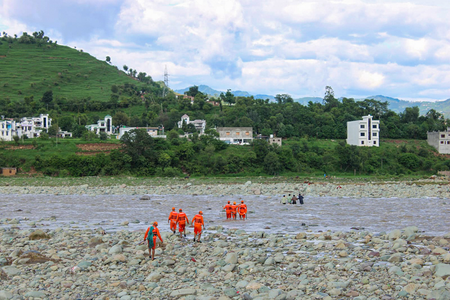
On August 1, a massive cloudburst hit the Chatroo area of Kishtwar district, leaving a trail of destruction, with floodwaters carrying debris, uprooted trees and rocks hitting residential areas and a local market.
Several houses developed cracks, shops were inundated, while parked vehicles were washed away. Power supply and communication were affected in some areas as officials launched restoration works.
Three back-to-back cloudbursts hit Shopian district in the last four days, causing heavy damage to public and private property in Badrhama, Pehlipora and Heerpora areas of the district.
Officials said the three cloudbursts inundated several houses and triggered emergency response from rescue agencies. Sudden cloudbursts led to a rapid influx of water, flooding residential areas and affecting several households.
Teams from the Shopian Police, the State Disaster Response Force (SDRF) and local residents immediately launched rescue and relief operations to evacuate affected people and assist those stranded.
Of the 35 cloudbursts occurring this year so far, 22 occurred between June 1 and mid-July, and persistent rain spells added more through late July and early August.
On Monday, a woman, Naseema Begum, 52, was in her agricultural field near a small Nallah when she slipped into a flash flood caused by a cloudburst in the Himli area of Lolab in North Kashmir’s Kupwara district.
Thirty-one people were killed in these cloudbursts, flash floods, and landslides.
The more heavily impacted districts are Poonch, Rajouri, Kathua, Doda, Kishtwar (Chenab Valley), alongside localised incidents in Kashmir, including Shopian, Kupwara, Bandipora, Anantnag (Pahalgam), and recent mudslides in Ganderbal.
Dozens of residential houses, shops, schools, irrigation canals and agricultural fields have been washed away or submerged.
Important highways including the Jammu-Srinagar National Highway and local roads in Kangan in Ganderbal district and Pahalgam have faced temporary closures due to accumulated debris and overflowing nallahs.
Local administration, police, and disaster response teams (SDRF/NDRF) have been deployed for ongoing evacuations and clearing operations.
The recurring extreme weather events have led to the destruction of residential houses, roads, bridges, agricultural land and other public utilities, besides affecting connectivity in several remote areas.
The latest spells of heavy rainfall have once again highlighted the vulnerability of mountainous regions to weather-induced disasters, with authorities continuing rescue, restoration and relief operations in several affected districts.
Disaster management authorities have advised people residing in flood-prone and landslide-vulnerable areas to remain alert and strictly follow weather advisories as the monsoon continues to impact the region.
Experts have attributed these devastating cloudbursts and other weather-related disasters to local factors in the Himalayan region and to the global phenomenon of climate change.
The local factors include ecological degradation caused by hill cutting, deforestation, and heavy construction in fragile zones. These factors destabilise slopes and choke natural drainage channels.
Global factors include rising global temperatures, which allow the atmosphere to hold roughly 7 per cent more moisture per degree Celsius, supercharging monsoon clouds.
Higher sea surface temperatures in the Arabian Sea and Indian Ocean increase the volume of water vapour carried by incoming winds toward the mountains.
Erratic Monsoon patterns, like shifted jet streams and localised convective systems, trigger tall, dense storm clouds that dump massive amounts of rain in minutes over tiny areas.
Geographical factors in Kashmir include fragile mountain terrain. Steep, narrow valleys and high-altitude slopes force warm, moist air rapidly upward, causing sudden heavy condensation and immediate runoff.
The cumulative effect of these human, ecological, geographical and climatic factors has been that each time clouds start gathering in J&K these days, people get panicky as nobody can foretell where the next cloudburst will strike.
–IANS
sq/dpb