Radio Brisvaani

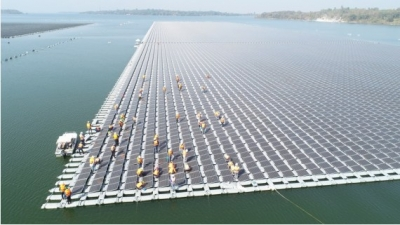
Chennai, April 28 (IANS) In a move to tap the vast renewable energy potential of waterbodies, Tamil Nadu Green Energy Corporation Limited (TNGECL) has initiated plans to set up floating solar photovoltaic (FPV) projects across multiple reservoirs in the state.
The initiative comes amid growing concerns over land constraints for conventional solar parks and the need to accelerate clean energy adoption.
As part of the proposal, TNGECL has identified seven locations for the pilot phase, including major reservoirs such as Mettur Dam, Bhavanisagar Dam, Vaigai Dam, Red Hills Reservoir and Sathanur Dam, along with a TNGECL-owned site at Avalanche.
These sites have been chosen based on their size, water availability and suitability for floating infrastructure.
Officials said the corporation has already reached out to the Water Resources Department (WRD) to obtain permission for using these reservoirs.
In parallel, a private firm has been roped in to undertake feasibility studies, focussing on technical viability and environmental considerations.
The project is expected to be formally announced once the Model Code of Conduct in force due to elections is withdrawn.
According to TNGECL sources, Tamil Nadu has a significant untapped floating solar potential estimated at around 3,000 MW across 57 reservoirs. The proposed pilot project is expected to generate around 100 MW in its initial phase, which will serve as a benchmark for future expansion depending on its success.
The feasibility study will assess critical factors such as project costs, integration of battery energy storage systems (BESS), reservoir depth, and overall site suitability.
Implementation is expected to commence after securing regulatory approvals. Officials noted that floating solar projects typically involve around 20 per cent higher investment compared to conventional ground-mounted solar plants.
The cost is estimated at ₹5 crore to ₹6 crore per MW, with each MW requiring roughly 3.5 acres of water surface due to additional floating infrastructure.
Despite the higher upfront investment, TNGECL believes FPV projects offer substantial long-term benefits. By reducing dependence on coal-based power generation, the state could potentially save between ₹10,000 crore and ₹15,000 crore over the next five years.
With land availability emerging as a key constraint for large-scale solar expansion, floating solar technology is increasingly being viewed as a practical and sustainable alternative. TNGECL is expected to scale up the initiative based on the performance and outcomes of the pilot phase.
–IANS
aal/rad