Radio Brisvaani

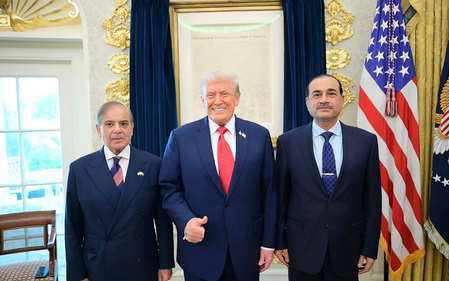
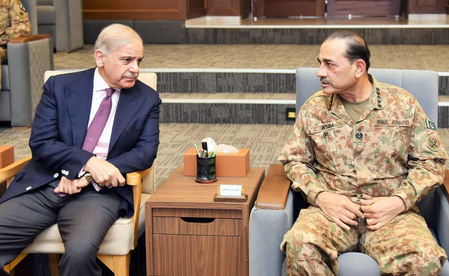
Abu Dhabi, Dec 27 (IANS) Pakistan’s long-used tactic of ‘hoodwinking’ risks yielding diminishing returns in a more transactional and leader-centric United States after Pakistani Army Chief Asim Munir committing troops to support US President Donald Trump’s high‑risk Gaza stabilisation project.
If Trump begins to view Munir as another “unreliable partner” – one willing to extract concessions while avoiding delivery — the guarantees Munir seeks on tenure, investment, and indulgence over Imran Khan could weaken rapidly, a report said on Saturday.
“Field Marshal Asim Munir’s ascent as Pakistan’s most powerful military ruler in decades has coincided with President Donald Trump’s high‑risk Gaza stabilisation project, creating the perfect environment for a transactional understanding between Rawalpindi and Washington. Munir delivers Pakistani boots for Trump’s proposed International Stabilisation Force (ISF) in Gaza, while the US delivers economic lifelines, political cover, and indulgence of his domestic crackdown, especially against Imran Khan and the Pakistan Tehreek‑e‑Insaf (PTI),” a report in the UAE-based Al Arabiya Post detailed.
“Yet, as pressure mounts, Pakistan’s familiar act of over‑promising and under‑delivering appears to be re‑emerging, with Munir dragging his feet on ISF commitments while extracting maximum geopolitical rent,” it added.
According to the report, Munir’s authority today is anchored in firm institutional control over the military and intelligence apparatus, a submissive civilian facade in Islamabad, and the calculated erosion of Imran Khan’s political challenge.
“His elevation to Field Marshal, consolidation of authority over all three services, and ruthless suppression of PTI after the May 9, 2023, unrest have turned him into Pakistan’s de facto ruler, but also into the single point of blame for economic hardship, political repression, and strategic setbacks such as the humiliation of India’s Operation Sindoor,” it added.
For Munir, the report said, external backing has become a survival imperative rather than a luxury, driving his need for three assurances from Washington.
“First, quiet support for extending his tenure and preserving his extraordinary powers beyond the usual institutional norms. Second, investment and economic relief to shore up Pakistan’s tottering economy and provide a narrative of ‘rescue through strategic alignment,’ visible in recent US–Pakistan MoUs on minerals and energy investments. Third, a blind eye regarding the legal persecution, media blackout, and physical isolation of Imran Khan, whom many observers now describe as the central victim of a military‑engineered political purge,” it detailed.
The report noted that if Munir continues to stall, Washington will be forced to choose between diluting the ISF concept by relying on a smaller, less credible coalition, or confronting Pakistan more directly over unmet commitments — both carry high costs.
“The Faustian bargain” it said, which promised the Pakistani Army chief “external protection in exchange for Gaza may yet collapse, leaving him overexposed at home and increasingly distrusted abroad.”
–IANS
scor/as