Radio Brisvaani

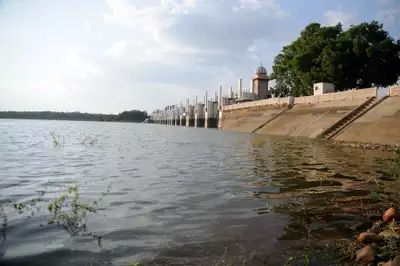
Chennai, March 4 (IANS) Rapid and unplanned urban growth is placing increasing pressure on the water resources of the Chennai river basin, raising concerns about the city’s long-term water security. A new data-based assessment has warned that the steady disappearance of traditional water storage systems could significantly worsen water shortages in the coming decades.
The study, carried out by the Tamil Nadu Green Climate Company (TNGCC), a government body, in collaboration with the Council on Energy, Environment and Water (CEEW), highlights how expanding urban development has begun to undermine the natural water management systems that historically supported the region.
The findings underline the urgent need for better planning and conservation of water bodies. According to the assessment, Chennai has already lost a substantial portion of its traditional tank storage capacity due to urban expansion and land-use changes. The loss of these tanks has reduced the basin’s ability to store rainwater and regulate water availability during dry periods.
Beyond the city limits, a much larger volume of tank storage across neighbouring districts is also under threat as urbanisation continues to spread. If these water bodies are not protected, the region could face deeper water stress despite receiving seasonal rainfall.
The erosion of interconnected tanks and water bodies has weakened the natural hydrological resilience of the basin. Traditionally, these tanks played a crucial role in storing rainwater and distributing it for irrigation, domestic consumption and groundwater recharge. Their gradual disappearance has reduced the region’s ability to manage seasonal rainfall and buffer against drought conditions.
The assessment also highlights growing pressure on sewage treatment systems in the basin. Existing treatment infrastructure is struggling to cope with rising wastewater generation, resulting in untreated wastewater entering rivers and canals. This trend has begun to degrade both surface water and groundwater quality across several parts of the basin.
The Chennai River basin covers Chennai, Chengalpattu, Kancheepuram, Ranipet and Tiruvallur districts and contributes nearly 33 per cent of Tamil Nadu’s economy, making water security in the region a critical economic concern.
Using Water Evaluation and Adaptation Planning modelling, the report projects that total water demand in the basin will rise from 2,479 MCM in 2025 to 2,728 MCM by 2050 under a business-as-usual scenario.
Agriculture is expected to remain the largest consumer, accounting for nearly 60 per cent of total demand by 2050, while population growth will drive a steady increase in domestic water requirements.
The study indicates that the gap between water supply and demand is expected to widen significantly over the next two decades. If current trends persist, the basin could struggle to meet the growing requirements of agriculture, households and industries.
Risk mapping carried out as part of the assessment shows that certain river sub-basins within the Chennai region are more vulnerable than others to water-related stress.
Factors such as groundwater quality decline, coastal exposure and dependence on rainfall-based agriculture have been identified as key drivers of vulnerability.
Experts involved in the study have suggested that improving water-use efficiency and expanding water recycling will be essential to managing the basin’s future water needs. Measures such as increasing micro-irrigation coverage and promoting the reuse of treated wastewater could help reduce the growing water deficit across the region.
–IANS
aal/dpb