Radio Brisvaani

New Delhi, Aug 4 (IANS) Investigators in West Bengal are probing the broader objectives of a Jaish-e-Mohammed-linked module that was recently busted by the Special Task Force (STF).
While investigators have established that one of the module’s key objectives was to build an influencer network, the STF is also examining evidence suggesting plans to recruit a large number of women to allegedly target the sons of ministers in West Bengal and other states through honey-trap operations.
An official said that the module had placed special emphasis on West Bengal. Investigators have learnt that it was designed as a multi-purpose network with plans to recruit many operatives.
According to the official, the module had allegedly been tasked by Pakistan’s Inter-Services Intelligence (ISI) with targeting the Chief Minister of West Bengal, expanding its influencer network, and recruiting women to carry out honey-trap operations targeting ministers and their sons.
“Setting honey traps was one of the main intentions of this module,” an official said.
Investigators said the module was allegedly scouting for young women who could be recruited for honey-trap operations. Officials added that those recruited were allegedly promised hefty payments in return for carrying out such assignments.
Another official said that once the girls were recruited into the modules, they were told to set traps on the specific targets — sons of ministers.
During the probe, it was uncovered that the Jaish-e-Mohammed linked module had plans of abducting the sons of ministers and demanding huge ransom through an extortion racket.
An Intelligence Bureau official said that the manner in which these newer modules are working is highly disturbing.
Earlier modules were set up by the ISI-backed elements with the sole intention of carrying out a terror attack. Those modules were only told to focus on procuring materials, preparing bombs, and then strike at important locations. However, the new modules, especially created by influencer-turned ISI operative Shehzad Bhatti, do not focus much on blasts or fedayeen attacks.
“These modules are more into running disinformation campaigns, espionage, setting honey traps, abductions, extortion and targeted strikes,” the official added.
This is a well-planned strategy by Pakistan’s spy agency as the risks in undertaking such activity are less when compared to carrying out a bomb blast.
“A bomb blast requires expertise, logistical support, among others. Such an activity also tends to leave a major trail, which makes it relatively easier for the agencies to track. This is something that the ISI wants to avoid at any cost,” officials say.
Another trend emerging in recent times is the recruiting of women influencers. Post Operation Sindoor, the agencies arrested a noted influencer, Jyoti Malhotra. The investigating agencies accused her of creating positive content about Pakistan. She was also accused of trying to gather sensitive information and then pass it on to Pakistan through its embassy in New Delhi.
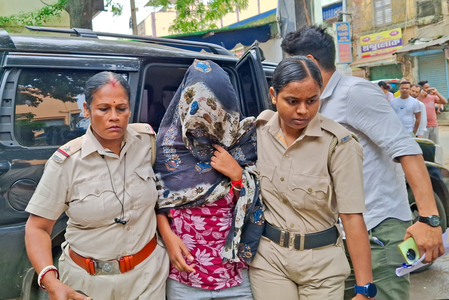
The West Bengal STF’s investigation has uncovered a similar pattern. Among those arrested is alleged influencer Arpita Sarkar, a 22-year-old woman from Jharkhand. Investigators are examining her alleged links with the module’s key accused, Hamim Mondal of West Bengal. The STF is also scrutinising her digital records and probing the purpose behind her frequent visits from Jharkhand to Kolkata.
The agencies are also looking at attempts that this module was making to incite violence at Jantar Mantar in New Delhi. Further, the module members were in the process of procuring police uniforms to establish contacts with influential people in a bid to gather important information, the officials said.
–IANS
vn/snj/skp