Radio Brisvaani

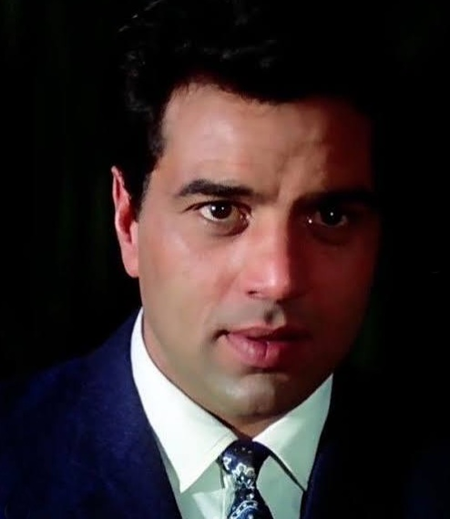
“120 Bahadur”, showcasing the unforgettable Battle of Rezang La during the 1962 India-China war, had hit the screens, but the first account of the gallantry and mettle of the outnumbered Indian soldiers in the frozen terrain of Ladakh, albeit with some cinematic licence, came to the screen some six decades back — with Dharmendra in the lead.
Chetan Anand’s “Haqeeqat” (1964), considered one of the best of the war genre in the Indian film industry, was loosely based on the battle, where the Ahir company of 13 Kumaon, led by the redoubtable Major Shaitan Singh, faced a Chinese attack, comprising soldiers many times their number. Despite being encircled, they inflicted heavy losses on the adversary, at the cost of 95 per cent of the formation being wiped out.
In the film, Dharmendra plays Captain Bahadur Singh, loosely based on Major Singh, while his immediate superior is Major Ranjit Singh, played by Balraj Sahni.
The overall commander is Brigadier Singh, essayed by the redoubtable Jayant and based on the then Chushul Brigade commander (and later Army chief), Brigadier T.N. Raina. In the film version, the Brigadier also happens to be the father of Captain Singh, to bring out the dilemmas of a commander and a father, who is aware he is dispatching his officer and son into mortal peril, but is bound by duty and the soldier’s code.
The end is predictable – Dharmendra, as the Captain, and a Ladakhi woman he befriends, die fighting against insurmountable odds as the officer, in the best traditions of the service, remains behind to cover the retreat of his men. This is also to no avail, as most of them are also killed.
This is revealed by a montage of the soldiers’ bodies strewn across the near lunar landscape, their grieving families, and the mass support to the conflict across the nation, to the strains of the grim yet uplifting song “Kar chale ham fida jaan-o-tan sathiyon, Ab tumhare hawale vatan sathiyon”, rendered by Mohd Rafi, penned by Kaifi Azmi, and composed by Madan Mohan.
The movie, shot in the stark terrain of Ladakh, is, true to its name, uncompromising as to the travails and tragedy of conflict, and was widely welcomed, though there were some critics of some of its aspects.
These included some survivors of the Battle of Rezang La, with one of them, in a media interview, revealing that he walked out midway through the film. However, his protest was only due to the embattled platoon bearing the shoulder epaulettes of the Punjab Regiment, instead of the Kumaon Regiment.
Why this was another unique story
Director Chetan Anand, despite all the aid he got from the Indian Army and Air Force to shoot in Ladakh, was running some Rs 10,000 short of funds, and an acquaintance proposed that he meet then Punjab Chief Minister Partap Singh Kairon to seek help. Anand did so, and Kairon instantly sanctioned an amount of Rs 2 lakh, with just the request that the contribution of soldiers of Punjab be also commemorated.
Incidentally, “Haqeeqat”, which came in the early days of Dharmendra’s film career, is not the only time he played a soldier. Less than a decade later, he was seen in a Navy uniform in “Tum Haseen Main Jawaan” (1970) and then donned the army uniform again to play Major Ram Kapoor in Ramanand Sagar’s “Lalkaar” (1972), with Rajendra Kumar as his elder brother from a sister service, as Wing Commander Rajan Kapoor. However, this film deals with operations in then Burma against the Japanese during World War 2.
In a related role, Dharmendra will soon be posthumously seen in “Ikkis” as Brigadier M.L. Khetarpal (retd), the father of the intrepid cavalryman 2nd Lt Arun Khetarpal, who was awarded the Param Vir Chakra for his heroic role in the Battle of Basantar during the 1971 India-Pakistan war, at the cost of his life.
(Vikas Datta can be contacted at vikas.d@ians.in)
–IANS
vd/skp