Radio Brisvaani

Birmingham, June 13 (IANS) Bangladesh are coming into the 2026 ICC Women’s T20 World Cup on the back of being runners‑up in a tri‑series involving Scotland and Netherlands after suffering a 3‑0 home series defeat to Sri Lanka.
Their overall record of just three wins in 25 World Cup matches defines the scale of the challenge they will face in the competition, where they are placed in a group alongside Australia, India, and South Africa.
It’s the first time Bangladesh will play in England and despite the odds being daunting, the tournament offers a rare chance for the Nigar Sultana Joty-led side to overturn history and redefine their batting narrative.
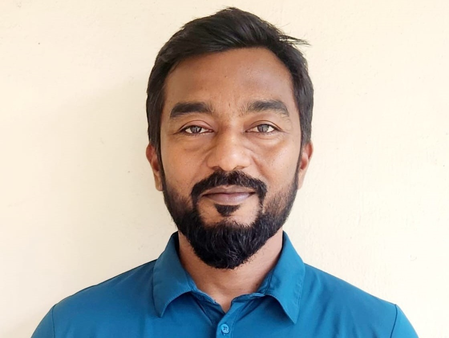
Bangladesh women’s batting coach Nasir Uddin Faruqe spoke exclusively to IANS on the team’s preparations from a batting perspective, upping the strike‑rate being a key focus, and the role of key batting figures ahead of their opener against the Netherlands at Edgbaston on Sunday.
Q. From a batting perspective, how have the preparations been for Bangladesh ahead of this Women’s T20 World Cup?
A. The preparation started well after the qualifiers were held in Nepal. We played some domestic matches and against Sri Lanka on good tracks. Basically, we didn’t play in England before. So BCB arranged a fruitful tri-series for us in Scotland that helped the batters adapt to similar conditions to be found in England and fortunately, they got enough time to adapt well as time went on.
That was the main concern after the qualifiers. We tried to get good wickets in Bangladesh and also did some skill sessions on concrete wickets and marble slabs. Playing in Scotland helped the batters a lot – it was a freezing cold phase, with tough weather conditions there.
After the warm-up games in England, it is much better now. The batters came out of their comfort zone in Scotland to adapt to the weather, and that has helped them a lot physically and mentally in preparing for the World Cup.
Q. Nigar Sultana has over 2,500 WT20I runs and is the only Bangladesh batter with a T20 World Cup fifty. How do you plan to build the batting unit around her?
A. Nigar Sultana Joty has been performing at a high level for the past four years, especially in the T20 format, and she is now more mature than ever. She understands her role and what the team expects from her. These days, some exciting young players adapt quickly to the international circuit when others clearly define their roles in the middle.
This could be one of the most memorable World Cups for us, and Joty has the freedom to play the way she loves. It doesn’t matter how many fifties we score – what matters is the impact we create as a team and the way each player contributes to the total.
Q. Sobhana Mostary has shown promise, especially with 482 runs at a strike rate of 123 since 2024 being the highest for Bangladesh. What role do you see her playing in these conditions?
A. Sobhana now understands her strengths and how to build her innings. She has become one of the finest performers for Bangladesh in ICC events. What she needs is to carry the momentum through the middle overs and execute well in the death. If she does that in her own way, our batting unit will definitely sparkle during this World Cup.
Q. Shorna Akter has struggled in past World Cups but impressed recently with her dual role as a batter and leg-spinner. How are you working to unlock her potential this time?
A. Shorna is the most important player for us when it comes to executing the batting plans in death overs. She needs to trust her strengths and play with a clear mindset. I believe this World Cup can be a career‑changing opportunity for her to show the world how capable she is. She is a complete package for our side. She works really hard on her batting during preparation camps, and I hope she delivers well in this World Cup.
Q. Bangladesh’s strike rates in World Cups have generally hovered in a lower range. Is there a conscious push to raise the tempo this edition?
A. Our major focus in the preparation camps was on upping the strike rate. We held practice sessions to work on how to increase our strike rate. We approached it phase‑wise – how to play in the powerplay, how to manage the middle overs, and how to execute shots in the death overs.
These sessions helped the players understand how to match up more easily in those phases. For this World Cup, our main concern is maintaining strike rate, and I believe they will definitely give their best here.
Q. You’ve overseen the growth of Shorna, Dilara, Marufa and Disha since their Under‑19 days. How would you describe all of the mentioned players’ evolution from junior cricket to senior level?
A. Shorna, Dilara, Marufa, and Disha worked with me in the Under‑19s, and they have the potential to match up with the levels to succeed in international cricket. In reality, we didn’t have many tournaments after they arrived in the senior team – so the only option was our club cricket.
At that time, we didn’t look at how they performed; instead, we regularly watched those players in the national side and observed how they could adapt quickly to the international arena. Now, they are delivering well and I hope these players will raise the Bangladesh flag to great heights in the days ahead.
Q. Previously Bangladesh struggled on result‑oriented home pitches but are now benefitting from playing on sporting wickets. How has that shift influenced the batters’ development?
A. Playing on sporting wickets has changed a lot for our batters. Over the last 3-4 years, we played on tricky spinning tracks to get results. We even won matches scoring just over 110 runs. But that didn’t help our batters perform in the international circuit, especially in ICC events.
After we shifted to better tracks, the immediate results may not have shown, but it has definitely helped in the long run. Look at other associate teams like Scotland and the Netherlands – they have developed fantastically.
Everyone says our bowling department is our strength, but I believe in the near future that will change. Batting will become one of our strengths if we continue to play regularly on sporting tracks.
Q. Women’s cricket in Bangladesh has gained more exposure and social acceptance. How have you seen that cultural shift happen?
A. Nowadays women’s cricket is making a big impact on our culture and social media. Lots of people back home now follow women’s cricket – they want to know what the players are doing and how they perform. When I started coaching in women’s cricket, many people asked why I was working in this field.
They said I should work in the boys’ arena, but I took it as a challenge. Now, after all that bullying, they appreciate me for working so long because the culture is changing. The mindset of people is now more positive about women’s cricket. That is the biggest satisfaction of my coaching life – that at least I have done some good things, and those good things have helped change people’s minds.
Q. Looking ahead, what benchmarks have you set for the batting unit in this World Cup and what will be the realistic measurement of success for Bangladesh in this competition?
A. The benchmark we have set is pretty simple and realistic. We will definitely try to achieve more, like beating our previous high scores against all five teams if we bat first. In realistic circumstances, if we start well against the Netherlands in the first match, our journey will be colourful in this World Cup.
–IANS
nr/