
Radio Brisvaani

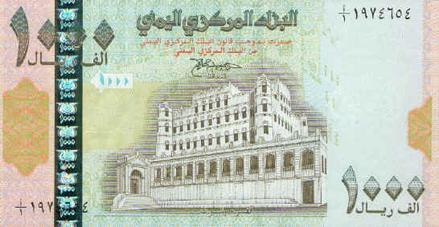
Aden, June 29 (IANS) The Yemeni rial has plummeted to an all-time low of approximately 2,760 per U.S. dollar in recent trading sessions, marking the currency’s steepest depreciation since the outbreak of civil war in 2015 and deepening the suffering of millions already grappling with what the UN calls the world’s worst humanitarian crisis.
The historic currency collapse has triggered a complete halt in foreign exchange operations at money changers across government-controlled territories during the past weeks, as traders fear further deterioration in the absence of immediate intervention measures, according to local banking sources, Xinhua news agency reported.
When Yemen’s conflict erupted in early 2015, the rial traded at approximately 215 per dollar. The current exchange rate represents a staggering depreciation of nearly 1,200 per cent, eroding the purchasing power of ordinary Yemenis and pushing basic necessities beyond the reach of millions.
Economic analysts have linked the rial’s decline to the Yemeni government’s worsening financial crisis, especially after the halt in oil export revenues since late 2022.
The halt resulted from Houthi attacks on oil infrastructure and ports, cutting off a vital source of revenue for the cash-strapped administration. The Houthis are demanding a comprehensive agreement on oil revenue sharing and the use of those funds for nationwide salary payments — an unresolved dispute that continues to deepen the economic crisis.
The rial’s freefall has sparked public demonstrations, with dozens of residents taking to the streets in the southern port city of Aden earlier this month, demanding immediate government action to halt the currency’s decline and implement comprehensive public service reforms.
Hussein Ali, a day labourer from the southern port city of Aden, is one of the millions in Yemen that is facing the struggle.
Ali, who supports a family of six, earns between 15,000 Yemeni rials (approximately 7 dollars) daily through construction, agricultural, or carpentry work. “In the past, a worker’s salary of 4,000 rials could meet all his family’s needs. Today, a daily wage barely covers the cost of one kilogram of rice,” he said.
“Every passing day brings greater hardship.” Ali lamented. “When the rial collapses, our entire lives collapse with it.”
Mohammed Al-Mahrabi, an employee at the Ministry of Education, faces similar challenges despite his seemingly stable job. “My salary cannot cover basic food and drink needs for my children. Additionally, salary payments are delayed for months, and I have accumulated significant debts,” Al-Mahrabi said.
Forced to supplement his income as a taxi driver, Al-Mahrabi now finds even this additional work unprofitable. “Fuel prices have reached 39,000 rials for 20 litres (approximately 15 dollars) and continue rising. My taxi work no longer covers gasoline costs. I am exhausted, and even extra employment has become meaningless,” he said.
Economic expert Ramzi Sultan said the ongoing currency value fluctuations are a major driver of worsening living conditions. “The rial’s ongoing depreciation reduces real wages, fuels inflation, and causes widespread shortages of essential goods. This destroys consumer confidence and business activity, accelerates capital flight, and increases poverty and unemployment,” he explained.
Sultan attributed the collapse to fundamental imbalances in financial and monetary policy. The government is facing declining revenues while its expenditures and obligations keep rising, he noted.
The problem is worsened by the divided banking system, with separate authorities operating in Sana’a and Aden. In territories controlled by the Houthi group, the dollar trades at approximately 537 rials using older banknotes that suffer from severe liquidity constraints.
This institutional division has weakened the Central Bank’s control over monetary policy and allowed black market operators to manipulate exchange rates, he said.
The currency collapse compounds an already dire humanitarian situation. According to United Nations data, approximately 80 per cent of Yemen’s population currently lives below the poverty line, with the economic crisis threatening to push millions deeper into destitution.
Last week, three major UN agencies issued urgent warnings about escalating food insecurity across Yemen’s southern provinces. The Food and Agriculture Organisation, World Food Programme, and United Nations Children’s Fund jointly reported that nearly 5 million people in southern Yemen face food insecurity, with conditions expected to deteriorate further without immediate intervention.
Without sustained assistance, an additional 420,000 people could fall into severe food insecurity between September and February 2026, bringing the total number of severely food-insecure individuals to 5.38 million — more than half the population in Yemen’s southern regions.
The agencies identified multiple factors driving this crisis, including prolonged economic decline, sharp currency depreciation, continued conflict, and increasingly frequent extreme weather events that disrupt agricultural production and food distribution networks.
Yemen’s current crisis stems from nearly a decade of devastating conflict that began in late 2014 when the Houthi group seized control of several northern provinces, forcing the internationally recognised government to flee the capital, Sanaa.
The conflict escalated significantly in 2015 following the intervention of a Saudi-led coalition aimed at restoring the legitimate government.
Despite numerous international mediation efforts and periodic ceasefire agreements, a comprehensive and lasting peace settlement remains elusive.
–IANS
int/dan