Radio Brisvaani

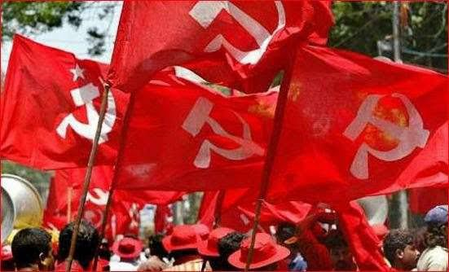
New Delhi, May 2 (IANS) A people’s mandate, to be declared on May 4, following the high-voltage Assembly election exercise, would be crucial for the Left parties who stand marginalised, except for a coalition government in Kerala.
Exit polls have, however, predicted a regime change in Thiruvananthapuram.
Meanwhile, in West Bengal, apart from the two main political parties (Trinamool Congress and the Bharatiya Janata Party) making headlines through the current poll process, the Left has found a mention for infusing newer, more energetic youth faces in the organisation, as well as among candidates.
It fielded 192 candidates across 294 seats in the state, emphasising that several of its nominees are from the party’s youth wing and aged below 45 years.
How far these younger leaders will be able to claw into a turf largely divided between the Trinamool Congress and the Bharatiya Janata Party is a subject of speculation. But that it is a battle for survival in the changing world is apparent.
The Left parties in Kerala — primarily the Communist Party of India (Marxist)‑led Left Democratic Front (LDF) — have stayed relevant till now unlike other states where they have withered, including West Bengal.
The roots of the Left in Kerala go back to the 1940s–50s, but its decisive breakthrough came in 1957 when a Communist‑led coalition formed the world’s first democratically elected Communist government.
After periodic setbacks, the LDF re‑emerged in the 1980s as a stable coalition, alternating power with the UDF and winning six government formations between 1980 and 2021.
The outgoing LDF government, led by Pinarayi Vijayan, despite portraying able governance and administrative successes, is facing inertia, factionalism within the CPI-M, and a growing dependence on charismatic leadership centred on the Chief Minister.
The party’s national weight has shrunk, and its ability to project ideology has weakened through times.
Moreover, the Left’s record on job‑creation and industrial growth has come under criticism, especially as Kerala faces rising fiscal stress and youth unemployment despite its high human development indices.
In West Bengal, the CPI(M)‑led Left Front held an almost unshakeable grip over state politics, shaping the state’s institutional structures, agrarian relations and social movements.
It first came to power post-Emergency period, in 1977, winning 230 of the 294 Assembly seats and securing around 54 per cent of the vote.
Under Jyoti Basu, the coalition implemented land reforms, strengthened local panchayats and expanded a network of public sector units and cooperatives.
The regime styled itself as development‑oriented but within a socialist framework, combining welfare measures with a rigid, cadre‑driven party structure.
Here, the Left’s decline was as dramatic as its rise.
Basu’s successor, Buddhadeb Bhattacharjee was in a hurry to attract industries, after aggressive trade unionism drove away prospective investors as factories shut shop.
By the 2000s, inflexibility over industrial policy — most visibly in the violent land‑acquisition conflicts at Singur and Nandigram — eroded its rural base.
The Trinamool Congress, led by Mamata Banerjee, successfully positioned itself as both ‘anti‑Left’ and ‘anti‑Congress’, winning the 2011 Assembly elections and ending 34 years of uninterrupted Left rule.
In the time that followed, and by 2019 it failed to win a single Lok Sabha seat in West Bengal.
The 2021 Assembly election delivered a near‑total wipeout, with the Left Front drawing a blank in the 294‑seat House.
In Tripura, the BJP triumphed in 2018, ending an uninterrupted Left rule after almost a quarter-century.
Overall, the Left’s organisational crisis has been compounded by an ageing leadership.
For years, key decision‑making in the CPI-M and its allied parties remained concentrated in the hands of veterans who had cut their political teeth in the 1970s and 1980s.
In recent years, the party at the all‑India level has begun institutionalising age limits, with 75 set as the upper age limit for central committee membership, and a wave of retirements has swept out many senior leaders.
In West Bengal, the Left Front and its constituent parties have publicly spoken of phasing out functionaries aged above 70 years and consciously bringing in younger faces into the state committee, district committees and, crucially, into election tickets.
This generational transition is not yet complete, but it reflects an explicit strategy, where the Left hopes that the youth can reconnect with first‑time voters, adapt to social media politics, and project a more open, less rigid image than the “old guard” associated with the regime’s later years.
–IANS
jb/khz