Radio Brisvaani

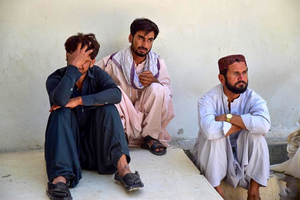
Quetta, Feb 10 (IANS) Balochistan’s alienation in Pakistan has been shaped by interrupted political processes, weak civilian administration and contested resource sharing, a report has highlighted. The insurgency in Balochistan did not start with Baloch leader Nawab Akbar Bugti’s killing in August 2006, however, the incident widened it, radicalised it and altered its social base, it stated.
“It also entrenched a pattern that continues to shape the State’s approach: Balochistan is treated primarily as a security problem, and dissent is viewed through the prism of disloyalty rather than democratic disagreement. The consequences of that approach are now unfolding with renewed intensity,” Naazir Mahmood, Dean of the faculty of Liberal Arts at a private university in Karachi, wrote in an opinion piece which appeared in Pakistan’s leading daily The News International.
Terror attacks targetting civilians, security personnel and infrastructure have occurred in Balochistan. These actions are reprehensible and cannot be defended under any political or moral framework. The State has the duty to safeguard life and uphold public order, which includes using force. However, force alone cannot be used as a sustainable plan. Years of intellectual and professional engagement in Balochistan indicates that the problem is well beyond militancy, the writer mentioned.
“Over the past two decades, through development-sector work with the UN agencies and through sustained association with the Human Rights Commission of Pakistan, I have travelled extensively across Balochistan and spent long hours in conversation with political workers, lawyers, educators, civil servants and ordinary citizens,” Naazir Mahmood wrote in The News International.
“These interactions consistently point to a political and governance deficit that predates and outlasts any particular insurgent group. Balochistan’s alienation has been shaped by a history of interrupted political processes, weak civilian administration and contested resource sharing. Elected governments have repeatedly been dismissed or rendered ineffective,” he added.
Most of the people in Balochistan experience the State mainly through security checkpoints instead of schools, courts or healthcare facilities. People of Balochistan often perceive development initiatives as externally driven and inadequately consultative.
The space for constitutional politics reduces when people feel governance is distant and unaccountable. Attacks in the region have increased in scale and sophistication despite repeated security operations. These violent groups have showcased their capacity to carry out coordinated attacks in multiple locations.
The perception of the people in Balochistan is that peaceful ways for dissent have been systematically closed. The State has started regulating and criminalising speech instead of addressing the legitimacy gaps. Laws that were implemented to counter cybercrime and terrorism have been used to target journalists, activists and lawyers. Advocacy on issues like enforced disappearances, criticism of security policies, and sharing dissenting views on social media have been considered as criminal acts.
“Balochistan cannot be pacified into loyalty, nor can its grievances be legislated away. A state that listens signals confidence; a state that silences reveals insecurity. Treating Balochistan as a permanent security file – and dissent as a threat to be eliminated – has brought Pakistan to its current impasse. Treating Balochistan as a political partner and dissent as a democratic necessity is a more demanding path,” Mahmood opined.
–IANS
akl/as