Radio Brisvaani

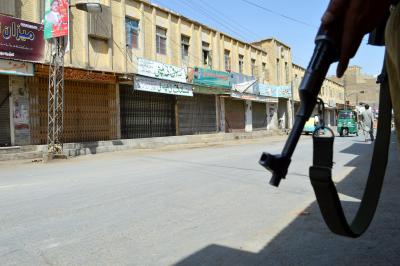
Quetta, March 16 (IANS) The pattern of resource extraction from Pakistan’s Balochistan without meaningful participation of local residents will continue to fuel resentment, militancy, and human rights crisis, a report has highlighted. Balochistan is Pakistan’s largest province by area and holds a disproportionate share of Pakistan’s minerals, energy reserves, and strategic coastal infrastructure. However, the local residents of Balochistan have not been included in decision‑making, benefits, and basic development.
“In recent years, the expansion of extractive projects, security‑driven mega‑infrastructure schemes, and a heavy‑handed state response to dissent have intensified grievances over land, livelihoods, and political autonomy, pushing questions of indigenous rights to the centre of Balochistan’s crisis,” a report in the European Times detailed.
Balochistan possesses roughly half of Pakistan’s discovered mineral wealth, with more than 50 minerals identified and around 39 actively exploited under more than 1,600 licenses. Balochistan hosts about 90 per cent of Pakistan’s copper reserves, substantial gold, sizable coal deposits, chromite, barite, marble, and other industrial minerals.
Despite having resources, people of Balochistan remain one of the poorest in Pakistan. The Baloch Board of Investment and Trade stated that Balochistan produces key minerals like coal, copper, and lead‑zinc barite, however, revenue and employment from these sectors largely flow to federal structures and private or foreign companies instead of local residents.
International and local human right groups have repeatedly said that major projects, including the China‑Pakistan Economic Corridor (CPEC) and port‑city development in Gwadar, focus on national and foreign strategic interests over consent of local residents and equitable benefit‑sharing.
“The connection between resource exploitation and indigenous rights is visible in Gwadar. The port city, heavily promoted as a CPEC flagship, lacks basic services such as clean drinking water and reliable electricity despite hosting multi‑billion‑dollar infrastructure. Local fishermen, who have relied on the sea for generations, report harassment, restrictions on access to traditional fishing grounds, and loss of livelihoods as commercial and security‑related projects expand. Simultaneously, Baloch activists and civil society documentation highlight that jobs and contracts around Gwadar and other CPEC corridors are often awarded to non‑Baloch workers and firms, reinforcing perceptions of economic exclusion and extraction,” the report in European Times stated.
Rights group Baloch Yakjehti Committee (BYC) has held protests demanding accountability for enforced disappearances, extrajudicial killings, and the exploitation of Balochistan’s resources. In 2024, thousands of people participated in Baloch National Gathering, demanding basic rights and an end to repression. In response, Pakistani authorities carried out mass detentions and ordered internet shutdowns in Gwadar, sparking criticism from human rights activists.
“Resolving the tension between resource exploitation and indigenous rights in Balochistan would require more than ad hoc reforms or rhetoric about development. It would entail legally binding mechanisms for free, prior, and informed consent, fair revenue‑sharing reflecting the province’s share of national mineral wealth, protection of fishing and agricultural livelihoods, and an end to extrajudicial detention and enforced disappearances. Without these measures, the pattern of extraction without meaningful participation will continue to fuel resentment, militancy, and human rights crises in Balochistan, even as the region’s resources power Pakistan’s and its partners’ strategic ambitions,” the report emphasised.
–IANS
akl/as