Radio Brisvaani

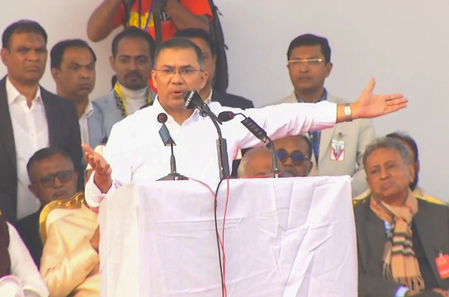
Dhaka, April 21 (IANS) The ban on the Awami League party enacted through the Anti-Terrorism (Amendment) Bill in Bangladesh’s Parliament not only targets the party but also sidelines its supporters, potentially deepening political instability and undermining public confidence in the democratic system.
According to a recent report in ‘The Diplomat’, if the practice of banning political parties becomes entrenched, it could set a precedent where any party may face a similar fate in the future.
Although the Bangladesh Nationalist Party (BNP) government’s decision to extend the ban on the Awami League, it said, is not surprising, given the deep-rooted animosity between the two parties, the move has sparked public scrutiny over the reasoning behind the ban and whether such measures are applied fairly.
The report noted that the interim government led by Muhammad Yunus also imposed a ban on the Awami League and its affiliate organisations under mounting political pressure, prompting widespread discussions both domestically and internationally. The international community, it said, had also advised against such a ban on political parties — a position grounded in core democratic principles.
“This brings the central question to the fore — is the law being applied equally to everyone? If a political party is banned on charges of past violence and human rights violations, why do other parties, facing identical or even more grave allegations, not face the same consequences?” the report questioned.
At the centre of the debate, it said, is Bangladesh’s largest Islamist party, Jamaat-e-Islami, whose role during the country’s 1971 Liberation War — particularly its collaboration with the Pakistani Army — has long remained a subject of intense controversy.
“The Jamaat is accused of complicity in the genocide of 3 million people in the run-up to and during the Liberation War. Indeed, even during the inaugural session of the current Parliament, the party was explicitly cited as an accomplice to the Pakistani military’s genocide during the Liberation War. Yet, the BNP government is not considering banning the party,” the report mentioned.
Highlighting the growing concerns over selective accountability, the report said, “This question is not merely political; it is fundamentally linked to the principles of justice and the rule of law. If a party is permitted to participate in electoral politics and secure parliamentary representation despite past allegations, it naturally raises a contentious debate — how fair is it to take punitive measures against another party while overlooking similar issues elsewhere?”
–IANS
scor/as