Radio Brisvaani

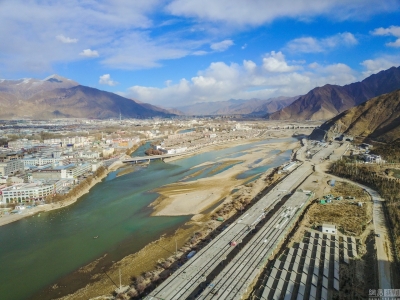
New Delhi, Oct 17 (IANS) China’s strategy to exploit the natural resources in Tibet to meet Beijing’s renewable energy targets is coming at the cost of the Himalayan region’s fragile environment and the crushing of the human rights of its poor people, recent reports in The Diplomat and other publications have highlighted.
Tibet is the source of many of Asia’s major rivers, including the Brahmaputra (known in Tibet as the Yarlung Tsangpo), and possesses the largest potential for hydropower in China. In July, China reportedly began construction on a new mega-dam project on the Yarlung Tsangpo River. This project, which includes five new power stations, is expected to become the world’s largest, with a generating capacity potentially three times greater than the Three Gorges Dam.
The dam projects have sparked serious concerns in downstream nations like India and Bangladesh over potential water scarcity and catastrophic flooding. Tibetan advocacy groups and environmentalists also warn of the severe ecological impact on the fragile Himalayan environment and the forced relocation of local communities.
The Tibetan plateau is also rich in critical minerals essential for modern technology and China’s renewable energy industry.
Tibet is a focal point for a “white gold rush” of lithium, a key component for electric vehicle batteries and energy storage. Significant deposits have been discovered in regions under Chinese administration, substantially boosting the country’s global lithium reserves.
As of late September, two major lithium projects in the Qinghai-Tibet plateau began large-scale production, supplying global battery manufacturers like Tesla and BYD. Existing copper and rare earth mines are also being expanded.
This mineral extraction has raised alarms over heavy metal contamination in local rivers, which threatens downstream ecosystems and the traditional livelihoods of Tibetan herders and farmers. Critics note that local Tibetans see little economic benefit from these projects, while bearing the brunt of the environmental damage.
Similarly, Tibet’s high altitude and clear air make it a prime location for solar and wind energy development.
China has established some of the world’s largest photovoltaic (PV) and wind power infrastructure on the Tibetan plateau, leveraging the abundant sunlight and wind resources. The scale and sophistication of this development are viewed by some analysts as reflecting a deliberate policy to leverage Tibet’s energy resources for strategic advantage, with potential military and ecological consequences.
The scale and speed of industrialisation in Tibet have raised profound environmental and ethical questions. The Tibetan Plateau — often called the “Third Pole” and “Water Tower of Asia” — is warming at twice the global average, making it one of the most climate-vulnerable regions on Earth. Large-scale mining and dam construction threaten to accelerate soil erosion, water contamination, and biodiversity loss.
Local resistance has been met with repression. The Diplomat reports the case of Tsongon Tsering, detained in October 2024 after documenting environmental damage from mining operations. His arrest underscores how dissent over environmental degradation is silenced under the guise of development and national security.
The Diplomat has driven home the point that as the world races toward net-zero goals, the story of Tibet shows that sustainability cannot be achieved through environmental destruction or the suppression of human rights. A truly green transition requires environmental protection, transparency, and community participation.
–IANS
sps/vd