Radio Brisvaani

New Delhi, Nov 28 (IANS) In a major leap toward strengthening public health security, India is set to leverage Artificial Intelligence (AI), real-time data analytics, and digital intelligence platforms to strengthen disease surveillance, according to officials at the National Centre for Disease Control (NCDC) on Friday.
The paradigm shift aims to significantly enhance the country’s ability to identify outbreaks before they escalate, enabling faster decision-making, rapid response, and proactive containment.
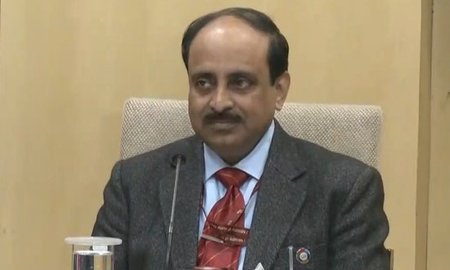
“Our vision is to integrate all the various disease reporting systems into one surveillance system under the umbrella of the integrated health information portal. And we are also trying to move up from our detective system to our predictive system,” Dr. Ranjan Das, Director, NCDC, told IANS.
Das also informed collaboration with other ministries and institutes for disease surveillance.
“We will also utilise technology further jointly with the various other ministries, as well as various science and technology institutions that we have across the country, including ISRO, the Institute of Science in Bangalore, the various IITs,” he told IANS.
The expert noted that the move builds upon the remarkable success of AI-based event surveillance systems already in use under the Integrated Health Information Platform (IHIP) of IDSP.
The AI-powered tool “Media Scanning and Verification Cell (MSVC)” scans millions of online news reports daily across 13 Indian languages, extracting structured health event data including the disease type, location, and scale.
The system has already processed over 300 million news articles since 2022, flagging more than 95,000 unique health-related events — a 150 per cent increase in detection capacity over manual systems, with 98 per cent reduction in workload for surveillance teams.
The transformative technology, known as Health Sentinel, acts as a “digital watchdog”, automatically identifying unusual spikes in diseases like dengue, chikungunya, and other public health threats, which are then verified by experts for accuracy.
“From being reactive to becoming anticipatory — the future of disease surveillance in India is now data-driven, intelligent, and predictive,” said Das, along with Dr. Himanshu Chauhan, Additional Director (Head, the Integrated Disease Surveillance Programme (IDSP)), while speaking with the media.
“The shift to predictive surveillance will leverage these powerful analytical capabilities to forecast disease trends and enable intervention even before the first case is reported, marking a major stride in India’s pandemic preparedness,” the officials said.
Further, strengthening this transition is the newly established Metropolitan Surveillance Units (MSUs) under the PM-Ayushman Bharat Health Infrastructure Mission (PM-ABHIM).
It has demonstrated exemplary real-time surveillance capabilities.
The officials also cited a recent incident where the MSU Nagpur promptly flagged the occurrence of suspected paediatric Acute Encephalitis Syndrome (AES) cases in Chhindwara district, Madhya Pradesh, to the Central Surveillance Unit.
This enabled rapid coordination among stakeholders, and a swift expert deployment by the National Joint Outbreak Response Team (NJORT), in collaboration with ICMR, NIE, and CDSCO, helped mount an immediate field response.
“The case illustrates the evolving capacity of India’s surveillance ecosystem to rapidly detect unusual clinical patterns and trigger early intervention — even in complex urban health settings. This approach also underscores the focus on collaborative surveillance that IDSP, NCDC has embarked upon and is cementing it further,” the officials said.
–IANS
rvt/