Radio Brisvaani

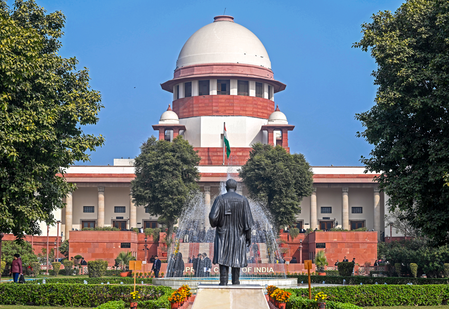
New Delhi, June 12 (IANS) The Supreme Court has held that courts dealing with child custody and visitation disputes must guard against subjecting children to repeated psychological evaluations, cautioning that such processes can lead to “secondary victimisation” and “re-traumatisation”, particularly in cases involving allegations of sexual abuse.
A bench of Justices Sanjay Karol and N. Kotiswar Singh on Thursday modified Bombay High Court orders that had first substituted the appointment of a single independent expert with a “panel of experts” and subsequently constituted a four-member panel to evaluate the child for facilitating reconnection with her father.
The dispute arose amid ongoing custody proceedings between the estranged parents and pending criminal proceedings under the Protection of Children from Sexual Offences (POCSO) Act, in which the father faces allegations of sexually abusing the child when the family was residing in the United States.
The father has, however, denied the allegations.
In its order, the Supreme Court said the present case extended beyond an ordinary custody dispute and raised important questions concerning judicially directed psychological evaluation of a child, who is also an alleged victim of sexual abuse.
“The issue, therefore, is not merely one concerning custody or visitation rights, but concerns the manner in which the justice delivery system must respond to and engage with a child victim while balancing welfare, dignity, psychological safety and procedural fairness,” the Justice Karol-led bench said.
Stressing that the welfare of the child remains the paramount consideration, the apex court emphasised that judicial procedures themselves must conform to standards of sensitivity, minimum intrusion and psychological safety.
“The justice delivery system cannot treat the child as a mere evidentiary object subjected to repeated forensic or psychological scrutiny at the instance of contesting litigants. The psychological integrity of the child constitutes an independent and paramount consideration which courts are duty-bound to preserve,” the Justice Karol-led bench said.
The apex court noted that the child had already experienced trauma due to the breakdown of the family and was undergoing therapeutic treatment.
In such circumstances, it said, any court-directed process exposing the child to multiple evaluators must be carefully scrutinised.
“Where a child who is already undergoing certain trauma because of the rupture in the family and deprived of undivided love, affection and care from both the parents, and when there is also allegation of sexual abuse by her own father, if she is going to be subjected to further investigation at the hands of psychologists as proposed to be done by the impugned orders, we must seriously examine as to whether such a course of action by virtue of the judicial orders may lead to ‘secondary victimisation’ and ‘re-traumatisation’,” the apex court order said.
At the same time, the apex court rejected the mother’s contention that courts can never seek expert psychological assistance where POCSO allegations are pending.
Holding that expert intervention may be appropriate in certain cases, the Justice Karol-led bench said that such intervention must satisfy the requirements of “demonstrable necessity, minimum intrusion, institutional neutrality, proportionality, and paramount consideration of the psychological well-being of the child”.
Modifying the Bombay High Court orders, the Supreme Court directed the Family Court to first appoint a psychologist to assess the mental and psychological condition of both parents, particularly the mother who presently has custody of the child.
The psychologist will also interact with the child’s treating psychologist and submit a report, based on which the Family Court will decide whether any further psychological assessment of the child is warranted.
If such an assessment is required, it must be conducted by a single independent child psychologist in consultation with the treating psychologist and with the minimum possible interaction.
The apex court also directed the Family Court to remain alert to concerns regarding possible parental alienation and false memory creation, while ensuring that the child is not exposed to any influence that could adversely affect her relationship with either parent.
The Justice Karol-led bench reiterated that in all proceedings involving children, especially those who are alleged victims under the POCSO Act, “the paramount consideration shall always remain the welfare, emotional security, dignity and psychological well-being of the child.”
The matter has been remitted to the Family Court for fresh consideration in light of the directions issued by the apex court.
–IANS
pds/khz