

• About Us
  • Our Editorial Policy
  • Business Directory
  • Advertise with Us
  • Our Advertisers
  • Contact Us
Australia India News
  • Alluring India - Brisbane Banner
India News Australia
  • Home
  • Current Issue
    Past Issue
  • India News
  • Politics
  • Business
  • World
    World This Week
  • Community News
  • What's On
  • Others
    Yoga in Australia News COVID-19 Community News Naari IPL News Health Travel Entertainment
  • Migrants Expo
  • National Events
  • Please wait..
Science

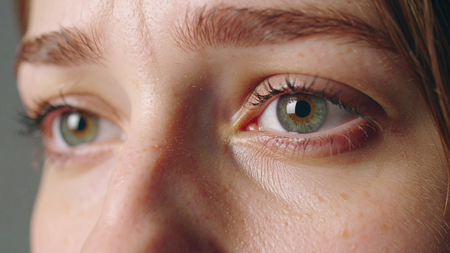
Study decodes eye contact for human-robot communication

  • BY India News Newsdesk
  • July 16, 2025
  • 0 COMMENTS

New Delhi, July 16 (IANS) The timing of eye contact is key to how we communicate with both humans and robots, revealed a study led by Australian researchers on Wednesday.

Researchers from Flinders University found that not just making eye contact, but when and how it’s done, fundamentally shapes how we understand others, including robots, according to a statement from the HAVIC Lab (Human, Artificial + Virtual Interactive Cognition), Xinhua news agency reported.

“Our findings have helped to decode one of our most instinctive behaviours and how it can be used to build better connections, whether you’re talking to a teammate, a robot, or someone who communicates differently,” said cognitive neuroscientist Nathan Caruana, who led the HAVIC Lab.

In a study with 137 participants, researchers found that a specific gaze sequence — looking at an object, making eye contact, then returning to the object — was the most effective non-verbal way to signal a request for help.

Caruana said it’s the context and sequence of eye movements, not just how often they occur, that make them meaningful, with participants responding similarly to humans and robots alike.

He said humans naturally respond to social cues, even from machines, and that understanding these signals can strengthen connections with both people and technology.

The study, published in the London-based Royal Society Open Science, suggests that adding human-like gaze to robots and virtual assistants could make them more intuitive and effective communicators.

Beyond robotics, the findings could enhance communication in high-stakes settings such as sports, defense, and noisy workplaces, and support those who rely on visual cues, including autistic or hearing-impaired individuals.

The HAVIC Lab is now exploring how factors like gaze duration, repetition, and beliefs about a partner’s identity (human or AI-driven) affect eye contact perception, according to the team.

–IANS

rvt/

Post navigation

India strengthens maritime ties during BIMSTEC Ports Conclave
Madhya Pradesh: CM Mohan Yadav orders inquiry into Harda incident

Related Post

From water yoga to marathon runs, India unites in wellness ahead of International Yoga Day
June 19, 2026
AIIMS Bhopal to mark International Yoga Day with focus on preventive healthcare
June 19, 2026
Japanese Encephalitis causes seven deaths in Assam; surveillance stepped up
June 19, 2026
FSSAI directs food businesses to replace rusted knives, warns of action for non-compliance
June 18, 2026

Our Current Issue

Alluring India 2026

Alluring India 2026

Our Advertisers

  • Battery Rebate australia
  • Bess Australia Solar Panels
  • Alluring India - Brisbane 2026

Follow Us

  • facebook
  • facebook
  • facebook
  • facebook
INDIA NEWS on YouTube in Australia, bring to our readers and subscribers national and international news, editorials, expert columns, community activities and interviews of political leaders, celebrities, business professionals, academics and sport personalities among others.
  • facebook
  • facebook
  • facebook
  • facebook

Category

  • Accident
  • Adani Australia
  • Advertorial
  • Arts & Culture
  • Ashes 2022
  • Australia

Recent News

  • TN District Child Protection Unit staff urge...
  • PM Modi extends Paschimbanga Divas greetings, prays...

Subscribe Newsletter

Get the latest creative news from india news

  • Privacy Policy
  • Disclaimer