
• About Us
  • Our Editorial Policy
  • Business Directory
  • Advertise with Us
  • Our Advertisers
  • Contact Us
Australia India News
  • Alluring India - Brisbane Banner
India News Australia
  • Home
  • Current Issue
    Past Issue
  • India News
  • Politics
  • Business
  • World
    World This Week
  • Community News
  • What's On
  • Others
    Yoga in Australia News COVID-19 Community News Naari IPL News Health Travel Entertainment
  • Migrants Expo
  • National Events
  • Please wait..
Science

Tiny metal particles show potential in targeting cancer cells: Study

  • BY India News Newsdesk
  • October 25, 2025
  • 0 COMMENTS

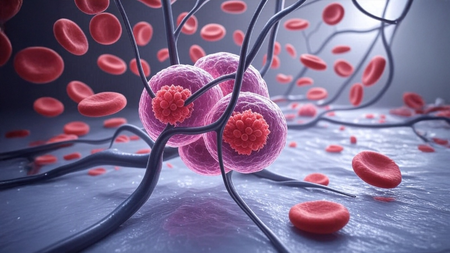
New Delhi, Oct 24 (IANS) Researchers have developed microscopic metal particles that can kill cancer cells while sparing healthy tissue, offering a potential new direction for more targeted and less toxic cancer treatments.

The study by the team from the Royal Melbourne Institute of Technology (RMIT) in Australia remains at the cell-culture stage and has not been tested in animals or humans, Xinhua news agency reported.

However, it suggests a new strategy for designing cancer treatments that exploits cancer’s own weaknesses.

The international team led by RMIT researchers created tiny particles, known as nanodots, from molybdenum oxide — a compound based on a rare metal called molybdenum. It is often used in electronics and alloys.

By tweaking their chemical composition, the scientists enabled the particles to release reactive oxygen molecules — unstable forms of oxygen that damage cancer cells and trigger their self-destruction.

In tests, the particles killed three times more cervical cancer cells than healthy cells within 24 hours, without the need for light, unusual for technologies that rely on oxidative stress, according to the study published in the journal Advanced Science.

“Cancer cells already live under higher stress than healthy ones. Our particles push that stress a little further, enough to trigger self-destruction in cancer cells, while healthy cells cope just fine,” said Zhang Baoyue, first author from the RMIT School of Engineering.

“The result was particles that generate oxidative stress selectively in cancer cells under lab conditions,” Zhang said.

Most cancer treatments affect both cancerous and healthy tissue, but technologies that selectively stress cancer cells could enable gentler, more targeted therapies, researchers said.

They added that these particles are made from common metal oxide instead of costly or toxic noble metals like gold or silver, making them likely cheaper and safer to develop.

–IANS

rvt/
Post navigation

India should remain vigilant after Myanmar’s crackdown on cyber scam hubs
Messi mess continues: Indian fans left waiting as Argentina cancels November visit to Kerala

Related Post

Bangladesh measles outbreak claims eight more lives, death toll climbs to 628
June 9, 2026
Uganda deploys health workers to DR Congo to support Ebola response
June 9, 2026
Dalai Lama undergoes successful left knee replacement surgery
June 8, 2026
Bangladesh measles outbreak claims seven more lives, death toll rises to 620
June 8, 2026

Our Current Issue

Alluring India 2026

Alluring India 2026

Our Advertisers

  • Battery Rebate australia
  • Bess Australia Solar Panels
  • Alluring India - Brisbane 2026

Follow Us

  • facebook
  • facebook
  • facebook
  • facebook
INDIA NEWS on YouTube in Australia, bring to our readers and subscribers national and international news, editorials, expert columns, community activities and interviews of political leaders, celebrities, business professionals, academics and sport personalities among others.
  • facebook
  • facebook
  • facebook
  • facebook

Category

  • Accident
  • Adani Australia
  • Advertorial
  • Arts & Culture
  • Ashes 2022
  • Australia

Recent News

  • Home Minister Amit Shah to launch Land...
  • Women’s T20 World Cup: Vintage Perry guides...

Subscribe Newsletter

Get the latest creative news from india news

  • Privacy Policy
  • Disclaimer