Radio Brisvaani

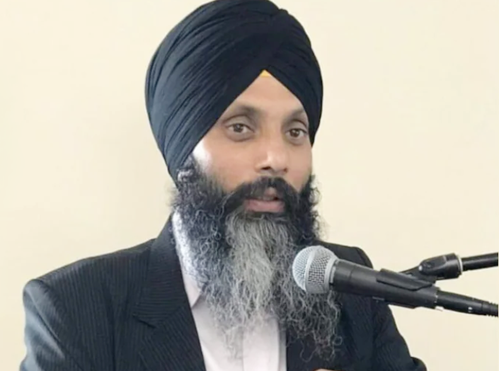
New Delhi, July 8 (IANS) The United States charging imprisoned gangster Lawrence Bishnoi and an associate for the 2023 murder of Khalistan separatist Hardeep Singh Nijjar in Canada has further underscored the fact that the killing was orchestrated by a transnational crime syndicate, not the Indian government.
The 33-year-old head of the “Bishnoi Gang” is known for high-profile crimes in India and abroad.
Earlier accusations plunged diplomatic relations, especially between Ottawa and New Delhi, into crisis. Nijjar was a Canadian citizen and Sikh separatist leader who campaigned for the creation of Khalistan. India had designated him a terrorist, accusing him of involvement in violent activities. He was shot dead outside a Sikh temple in Surrey, near Vancouver, on June 18, 2023. His killing immediately became a flashpoint in Canada–India relations.
Then-Prime Minister Justin Trudeau had stated that Canadian authorities were “actively pursuing credible allegations” linking Indian government agents to the murder. India rejected those claims as “absurd,” but the allegation led to a major diplomatic crisis, including expulsions of diplomats and a freeze in bilateral ties.
The United States has now unsealed an indictment charging Bishnoi and his associate Satinderjeet Singh, also known as Goldy Brar, with orchestrating Nijjar’s assassination. Bishnoi allegedly directed the plot from inside his cell in India, while Brar oversaw operations in North America. Importantly, the indictment does not allege any role by the Indian government in Nijjar’s killing, added reports.
“In an interview, RCMP (Royal Canadian Mounted Police) Deputy Commissioner Lisa Moreland said the investigation found no evidence that Indian officials were involved in the crimes alleged in today’s announcement,” according to a Canadian Broadcasting Corporation (CBC News) report early Wednesday India time.
“She added that the Indian government co-operated in the investigation,” it said.
Several American media reports also said the charges focus on organised crime networks, effectively undercutting earlier Canadian allegations of Indian state involvement. “Neither First Assistant US Attorney Bill Essayli nor any other official at a press conference in Los Angeles alleged that the Indian government was involved in or aware of the killing,” reported CNN on Wednesday.
India was largely blamed because of Canada’s public statements about suspected government involvement, which New Delhi strongly denied.
Now, the case frames Nijjar’s murder as a transnational organised crime operation, not a state-directed assassination.
Canada’s The Globe and Mail newspaper on Wednesday termed the killing and subsequent controversy around it as “the catalyst in a geopolitical crisis”. It added, “The US indictment accusing Mr Bishnoi and his associates is silent on the suggestion that agents of the Indian government were behind the killing.”
In October last year, the Toronto Sun newspaper noted that “After years of distrust and accusations, tense relations between Canada and India are starting to defrost.” It observed that Canada’s Prime Minister Mark Carney, extending an invitation to his counterpart in India to “his country for talks – further signs that relations between the two nations are normalising”. It was referring to the cold ties under Carney’s predecessor.
“Relations with India soured two years ago after former prime minister Justin Trudeau rose in the House of Commons to publicly accuse the Modi government of orchestrating the June 2023 assassination of Nijjar — a prominent Sikh separatist — in the parking lot of a B.C. (British Columbia) Gurdwarah,” said the report.
“The thaw began after Carney invited Modi to attend this summer’s G7 summit in Alberta, prompting both nations to reopen diplomatic relations,” it added, quoting former Canadian diplomat and Macdonald-Laurier Institute senior fellow, Alan Kessel.
“It was a clear signal that Canada was back to engaging and not isolating,” Kessel told the newspaper.
In September 2023, Trudeau publicly alleged “credible evidence” of Indian government involvement in Nijjar’s assassination in British Columbia.
India promptly dismissed such claims as “absurd” as both countries expelled senior diplomats of the other, froze trade negotiations, and halted ministerial dialogues.
Canada was accused of tolerating Khalistani separatist activity, which some reports had then called as compulsions of a coalition government.
With political changes in Canada and Mark Carney becoming Prime Minister in May 2025, Ottawa revisited its approach towards India.
Carney met Prime Minister Modi at the G7 Summit in Alberta last year, agreeing to reset relations. Both countries reinstated their respective High Commissioners, visa services were resumed, and ministerial dialogues restarted on trade, energy, environment, and security, and security officials from both sides began exchanging information on shared concerns.
–IANS
jb/uk