Radio Brisvaani

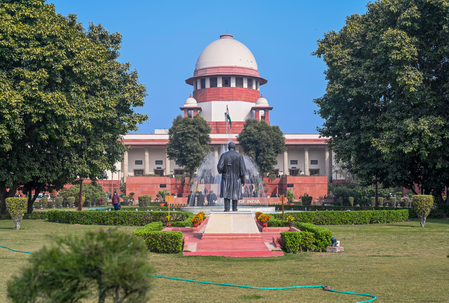
New Delhi, April 29 (IANS) In a significant ruling impacting thousands of reassessment cases under the Income-tax Act, the Supreme Court has set aside a series of High Court rulings that had quashed reassessment notices issued by Jurisdictional Assessing Officers (JAOs) and remitted the matters back for fresh adjudication in light of the Finance Act, 2026.
A bench of Chief Justice (CJI) Surya Kant, and Justices B.V. Nagarathna and Joymalya Bagchi passed a common order in a batch of thousands of appeals arising from divergent rulings delivered by several High Courts on the contentious issue of whether reassessment proceedings and notices under Sections 148 and 148A of the Income-tax Act, 1961 could validly be initiated by JAOs or were required to be exclusively handled through the faceless assessment mechanism.
The apex court observed that the reassessment framework underwent substantial legislative restructuring through the Finance Act, 2021, followed by the introduction of the e-Assessment of Income Escaping Assessment Scheme, 2022, which sought to institutionalise automated allocation and faceless proceedings.
“At the heart of the controversy lies the friction between the statutory provisions and the Scheme introduced under Section 151A, particularly concerning whether the Jurisdictional Assessing Officer continues to retain authority to issue notices and pass orders under Section 148A(d),” the order said.
The top court recorded that conflicting judicial opinions had emerged across High Courts, with some holding that JAOs and faceless authorities exercised concurrent powers, while others struck down reassessment notices issued by JAOs on the ground of lack of jurisdiction.
Given the legislative intervention through the Finance Act, 2026, which inserted Section 147A with retrospective effect from April 1, 2021, expressly clarifying that the “Assessing Officer” for the purposes of Sections 148 and 148A would exclude faceless units, the Supreme Court held that the legal basis underlying several favourable rulings secured by assessees had materially changed.
“Since the High Courts have primarily quashed the reassessment notices on the ground that the JAOs lacked competence to initiate such proceedings, and the very foundation of that view now stands altered by the amending legislation, the impugned judgments in favour of the assessees are set aside on this limited ground,” it ordered.
However, it refrained from adjudicating upon the constitutional validity or retrospective applicability of the newly inserted Section 147A and related amendments.
“We make it clear that we have not expressed any opinion on the merits of the controversy, including the validity, scope, effect, retrospectivity or applicability of the amended provisions, and all such questions are left open to be decided by the High Courts,” the order stated.
The Supreme Court granted assessees liberty to amend their writ petitions within four weeks to challenge the newly inserted provisions or raise any additional grounds, while allowing the Revenue three weeks thereafter to file written submissions and affidavits.
Further, it directed that all reassessment and assessment proceedings pursuant to the disputed notices would remain stayed during the pendency of proceedings before the respective High Courts, subject to terms imposed by those courts.
“During the pendency of the writ petitions before the High Courts, there shall be an interim stay of further assessment/reassessment proceedings,” the CJI Surya Kant-led Bench directed.
In an effort to expedite the resolution of the tax litigation affecting thousands of taxpayers, the apex court requested all High Courts concerned to decide the cases preferably by September 30, and cautioned against unnecessary adjournments.
“The High Courts are requested to decide the matters preferably by 30.09.2026. Learned counsel for the parties undertake to extend full cooperation,” the bench said.
–IANS
pds/vd