
Radio Brisvaani

Policy changes and risk reclassification impact Indian students in 2026
Canberra, April 12 (Australia India News Newsdesk)
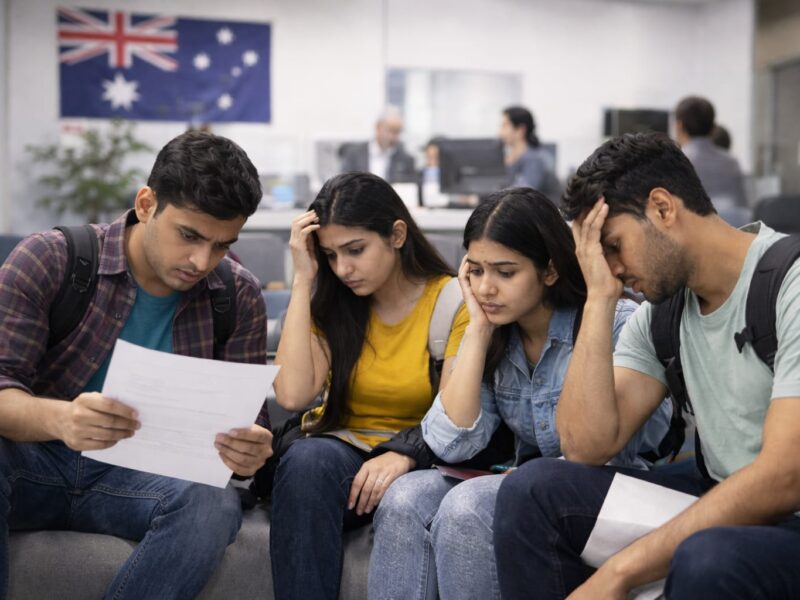
Australia has introduced stricter student visa measures in 2026, resulting in the rejection of nearly 40 per cent of applications from Indian students, according to recent reports and official data. The sharp rise in refusal rates signals a significant shift in the country’s immigration and international education policies.
Data from early 2026 indicates that Indian applicants are among the most affected, alongside students from countries such as Nepal and Bangladesh. The increase in rejections follows Australia’s decision to place India in a higher-risk category under its Simplified Student Visa Framework, leading to more rigorous assessment processes.
Under the updated system, applicants are required to submit more comprehensive financial records, academic documentation, and evidence demonstrating genuine intent to study. Authorities have stated that these steps are designed to safeguard the integrity of Australia’s education sector and prevent misuse of visa pathways.
The tightening of rules has coincided with a broader rise in student visa refusals globally, with approximately one in three applications being rejected in February 2026—marking the highest level in over 20 years. The impact has been particularly pronounced for South Asian applicants, while students from countries such as China continue to experience comparatively lower rejection rates.
Reports suggest that the policy changes are part of wider efforts by the Australian government to manage migration levels and respond to domestic pressures, including housing constraints and concerns over the quality of international student intake. However, the move has prompted concern among universities and education stakeholders, who warn it could affect enrolments and academic collaboration between India and Australia.
India remains a major source of international students for Australia, making the policy shift significant for bilateral education ties. Experts indicate that the stricter visa environment may encourage students to consider alternative destinations such as Canada, the United Kingdom, and Europe.
The development reflects evolving trends in global student mobility, as Australia adopts a more cautious approach while balancing migration control with its position as a leading destination for international education.