Radio Brisvaani

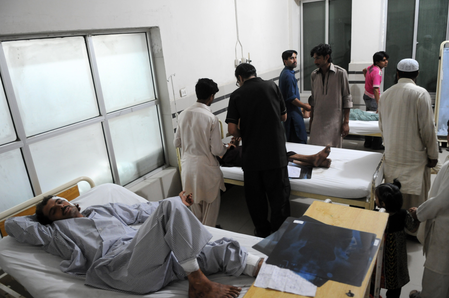
Islamabad, May 3 (IANS) The WHO’s Global Hepatitis Report 2026 has revealed that Pakistan is the single largest contributor to the number of people living with hepatitis C in the world, even as field reports from different parts of the country revealed continued availability of banned reusable syringes and fake auto-disable syringes in the market, which experts fear can cause transmission of hepatitis B, hepatitis C, and HIV, when used repeatedly by unqualified practitioners.
Pakistan is among the 10 nations that accounted for 58 per cent of the world’s hepatitis C-linked deaths in 2024. The WHO has said that global progress in eliminating hepatitis is slow, with 1.34 million people losing their lives due to hepatitis B and C. On hepatitis C, the report stated that the global burden is caused by historical transmission, unsafe medical practices and injecting drug use, with gaps in diagnosis and treatment access impacting the extent to which the burden has been lowered, according to the report.
“These drivers suit Pakistan to a tee, with recent field reporting from different cities finding continued availability of banned reusable syringes and fake auto-disable syringes, which experts fear can fuel transmission of hepatitis B, hepatitis C and HIV when used repeatedly by unqualified practitioners. Health experts also say unnecessary injections and quackery remain common in Pakistan, and infection prevention practices are poorly enforced in both formal and informal healthcare settings,” an editorial in Pakistani daily The News International said.
In April, an investigative documentary revealed “serious malpractice” in the children’s ward of a government hospital in Pakistan’s Punjab province. In 2025, Tehsil Headquarters Hospital (THQ) in Taunsa was connected to an outbreak of HIV among children. At the time, Punjab provincial authorities had announced that a crackdown would be initiated and suspended the Medical Superintendent of THQ in March of that year. However, a few months later, secret filming by ‘BBC Eye Investigations’ found that the lives of children were still being put at risk.
Filmed secretly over a few weeks, the BBC investigation revealed repeated and serious violations of basic infection control. The video footage showcases nurses injecting patients through their clothes, giving dirty syringes for re-use, and unqualified workers injecting child after child from a blood-contaminated vial of liquid medicine.
“If these kinds of practices are going on at a Tehsil headquarters hospital, then diseases like hepatitis C and HIV are likely to be the consequence. It is seemingly not enough that many Pakistanis cannot even access basic health services. Even a trip to a hospital or clinic has now become a problem because, for those who cannot afford one of the better, often private, hospitals, dealing with reused syringes, untrained staff, unsafe practices and outright quacks is a real threat. However, there is also a deeper layer to the hepatitis C tragedy,” the News International editorial rued.
“Despite the availability of short-course curative therapy that can cure more than 95 per cent of infections, the WHO report says only 20 per cent of people with hepatitis C have been treated since 2015. Pakistan’s high number of hepatitis C-related deaths thus highlights that many people are unaware of their status and/or not getting treatment, with the WHO saying that only 25-30 per cent of those affected are aware of it,” it added.
–IANS
akl/vd